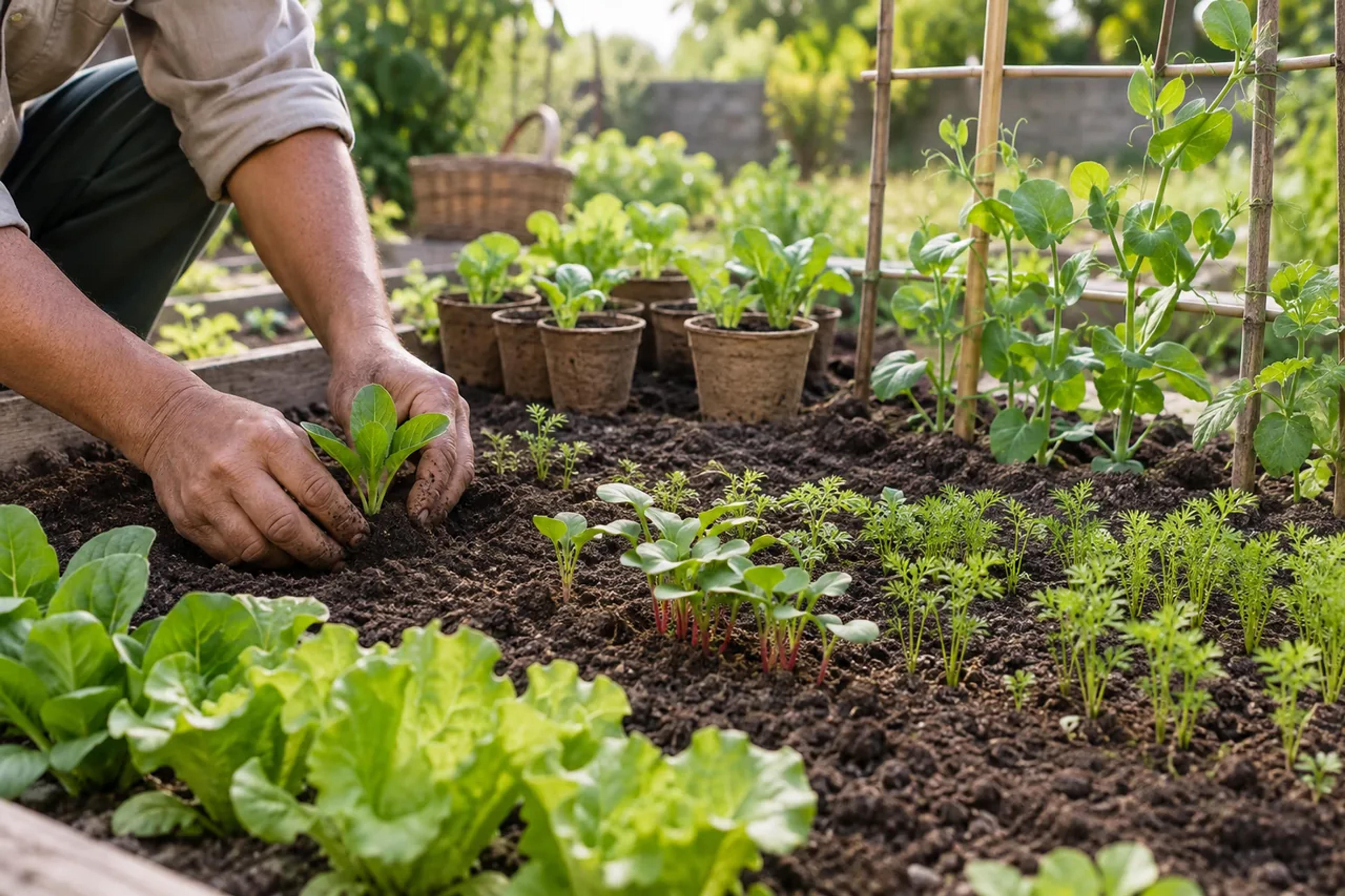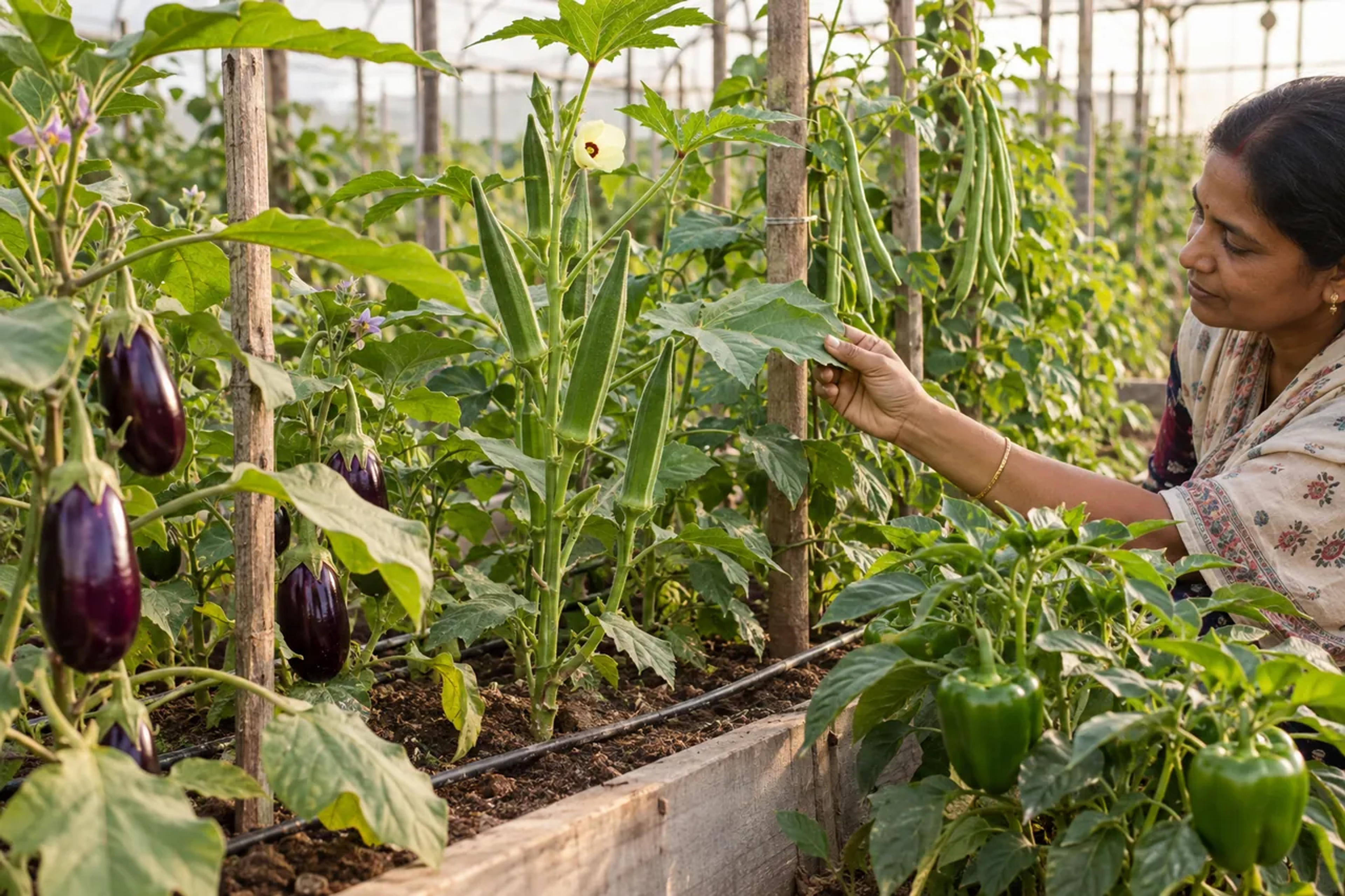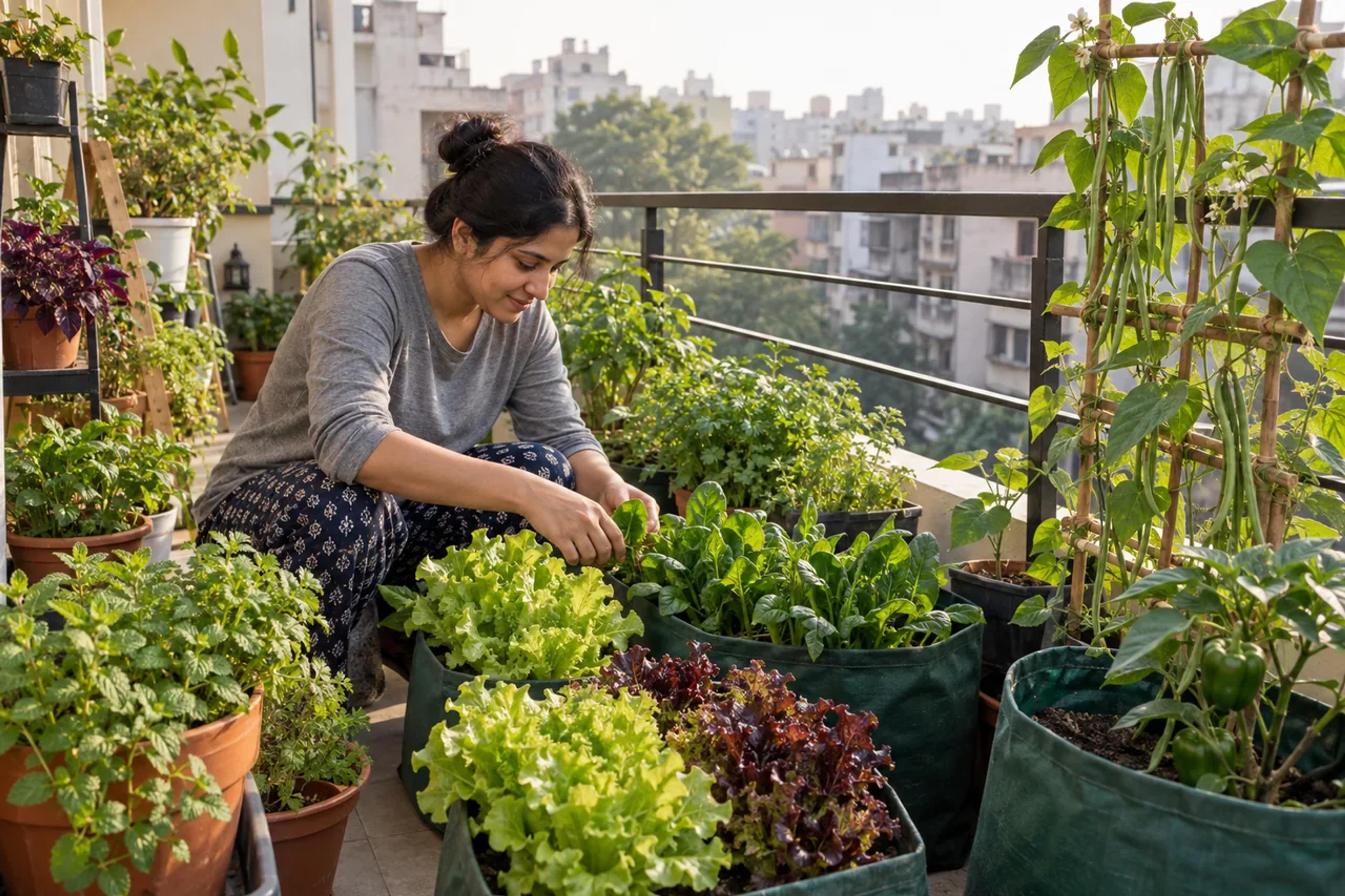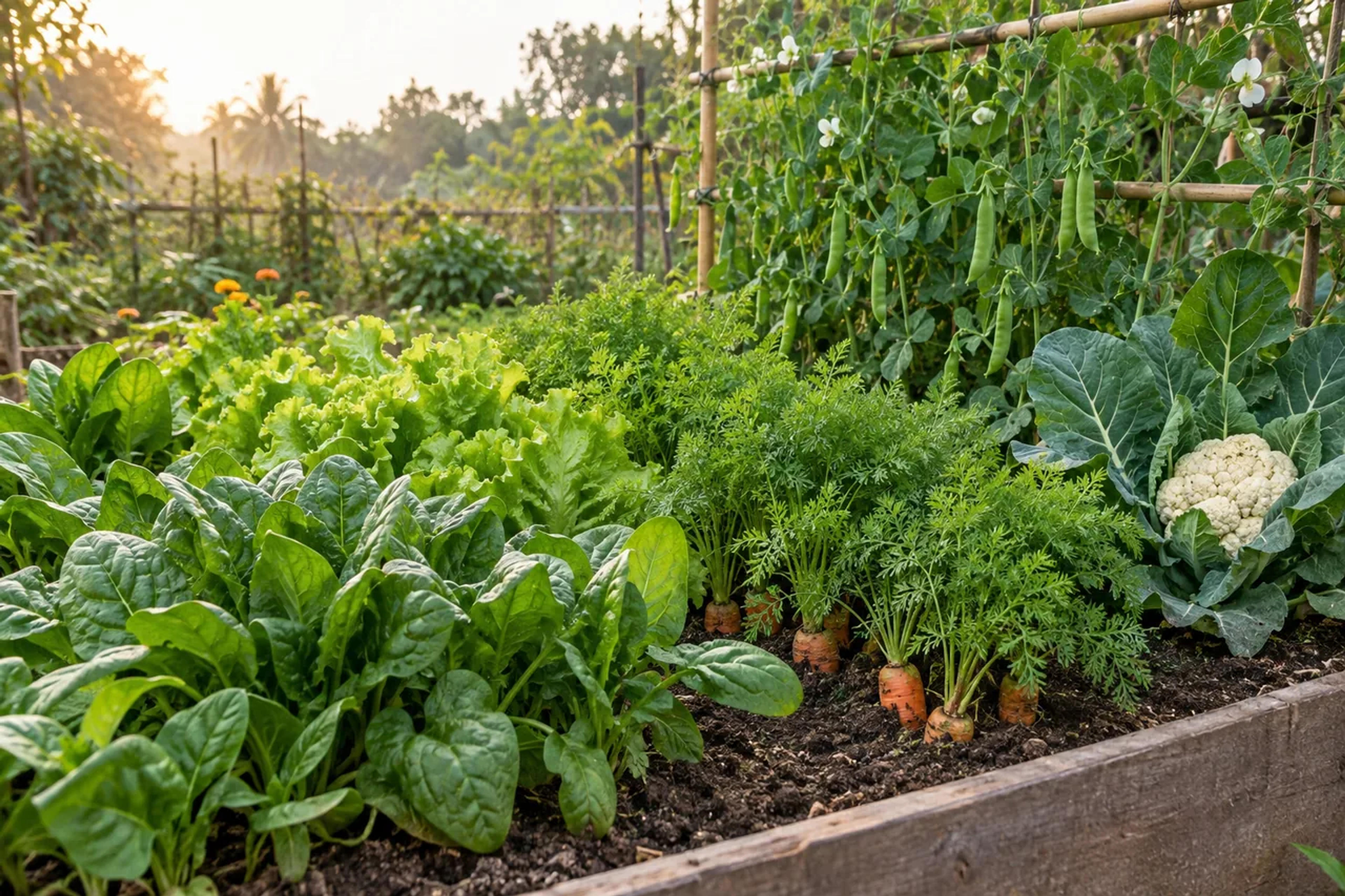
The weather starts cooling down and suddenly a vegetable garden sounds like a lovely idea. A little palak, some methi, maybe mooli too. Before the shopping list gets longer than the balcony, let’s choose one or two crops and work out what they need. Here’s a starting point for a winter garden in Delhi NCR.
Start with a short winter crop list
ICAR-IARI’s cropping examples for peri-urban areas list September–October for spinach and radish sowing, and October–November for methi. Use those windows to start planning, then check the particular variety and the conditions where you’ll grow it.
IARI has also demonstrated kitchen garden kits with spinach, peas, fenugreek, turnip, radish, onion, carrot and tomato in Gautam Buddha Nagar. That gives you more crops to explore. It doesn’t mean every seed in a kit goes into the ground on the same weekend.
Swipe the table sideways to read all columns →
| Crop | Reference sowing window | Before you buy seed |
|---|---|---|
| Palak / spinach | September–October | Check the variety’s sowing and picking instructions. |
| Methi / fenugreek | October–November | Decide whether you want tender leaves or a crop left to mature. |
| Mooli / radish | September–October | Match the variety’s root size to the soil depth available. |
Let your kitchen help you choose
Think about the last few meals you cooked. Do greens turn up often? Does anyone at home like mooli? Grow something you’ll be happy to bring inside, even if the first harvest is small.
Give each crop a labelled spot and keep its seed packet. Note the variety, sowing date and spacing. If something looks odd later, you’ll have more to show the nursery than a blurry photo and a hopeful guess.
- Choose one familiar crop, and one experiment if you have room.
- Sketch where each crop will go before sowing.
- Note when seedlings appear; an empty-looking patch may need more time.
- Ask when and how to pick the variety you’ve chosen.
Have a look at the balcony first
A bright balcony can still spend much of the day in shade. Watch where direct sunlight falls and for how long. University of Minnesota Extension recommends at least six hours of sun for most vegetables, along with containers that have drainage holes. Those checks are useful here; its local planting dates won’t be Delhi’s dates.
Think about where the water will go, too. Use a suitable potting mix and arrange drainage so it doesn’t run onto a neighbour’s space. Containers can dry faster than beds, so check the growing medium instead of assuming the same watering routine will work every day.
Give yourself something to look back on
Take a photo from the same spot each week and add a short note. New leaves? Seedlings finally up? A question about a yellowing leaf? A few lines are enough. You’re giving yourself a record you can use next time.
If you’d like more than one picking, ask whether the crop suits staggered sowing or repeated harvesting. That depends on the crop and variety. Start by learning one planting well before planning a weekly supply for the whole household.
And if there’s nowhere suitable at home?
That’s a reasonable place to be. A managed bed lets you choose from suitable crops while a farm team takes care of the everyday work. Ask how crop choices and harvests work, including what happens when a crop struggles.
We’re preparing that kind of experience at Kyari for Gurgaon and South Delhi. The location, sizes, crop options and prices are still to come. You’re welcome to join the waitlist for those details; it doesn’t reserve a winter harvest.