Seed packets ready, pots ready, enthusiasm fully ready. But is it the right month? This Delhi NCR vegetable sowing calendar will help you narrow things down. Read it alongside your seed packet and a local grower’s advice, because the variety, weather and your growing space can all shift the plan.
The Delhi NCR vegetable calendar at a glance
We’ve brought together the Eat Right School seasonal vegetable chart, ICAR-IARI guidance for the North Indian plains and ICAR’s kharif advisory. Start with the row for the coming months, make a shortlist, then check the variety before buying seeds.
Pay attention to words such as nursery and transplanting. They describe different jobs, and mixing them up can put your planting plan several steps out of order. We explain that just below the table.
Swipe the table sideways to read all columns →
| Months | Crop shortlist | What to check |
|---|---|---|
| January–February | Capsicum nursery into January; prepare for cucumber, okra, cluster bean, French bean and sponge gourd sowings commonly listed for February–March | Do not move heat-loving plants outside only because the calendar changed; check night temperatures and the variety. |
| March–April | Cucumber, gourds, okra and beans may be part of the spring–summer plan | Plan trellising, irrigation and afternoon heat protection before vines or fruiting plants fill the space. |
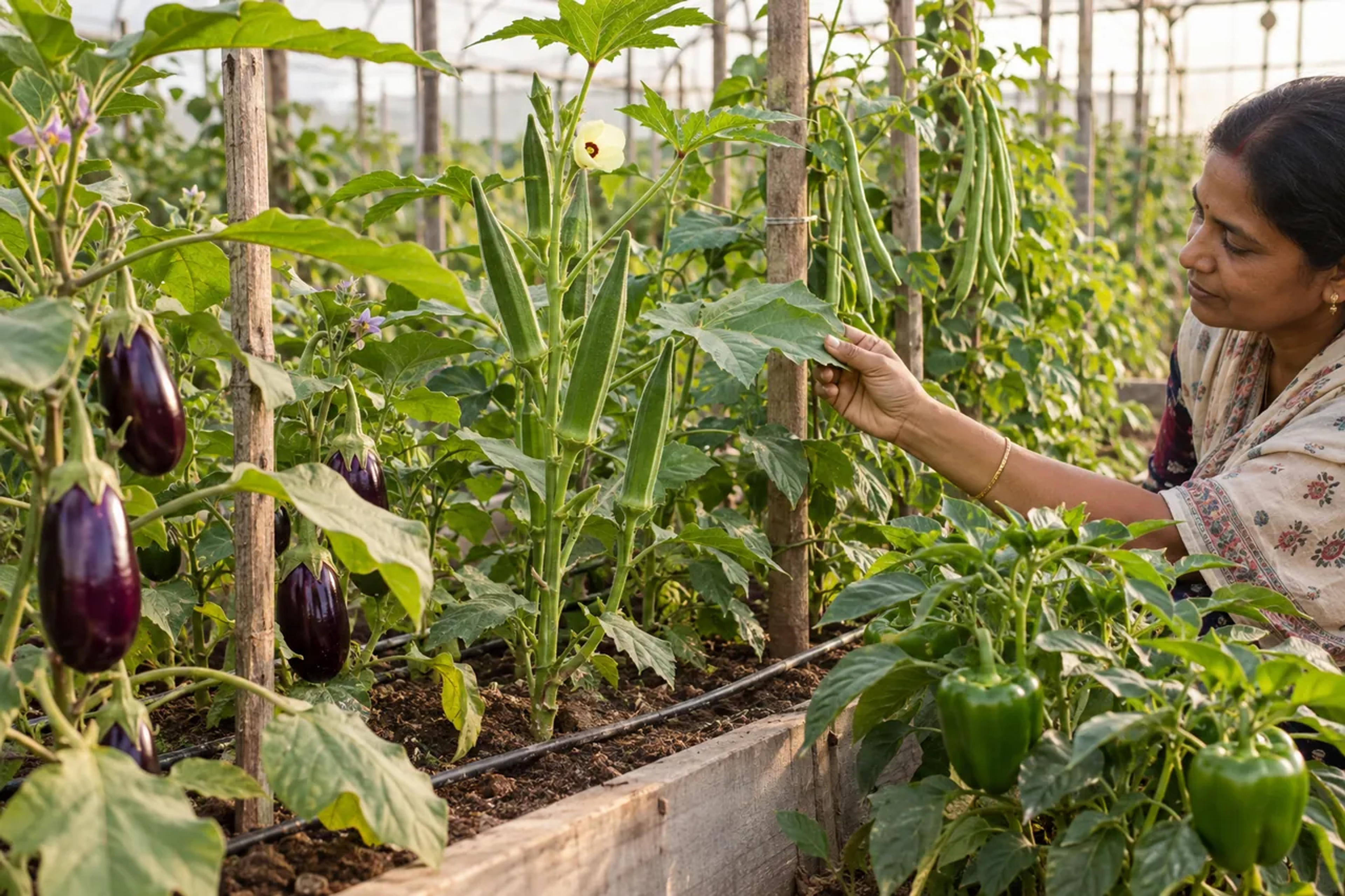
| May–June | Kharif okra and chilli; brinjal nursery; bottle-gourd preparation; early cauliflower nursery starts for suitable North Indian varieties | High heat and the approaching monsoon change germination, watering and disease pressure. Nursery and field dates are not the same. |
| July–August | Bottle gourd and cowpea; mid-early cauliflower nursery from late July; mid-late cauliflower from late August | Protect young plants from waterlogging and heavy rain. Confirm whether the variety is bred for its intended temperature window. |
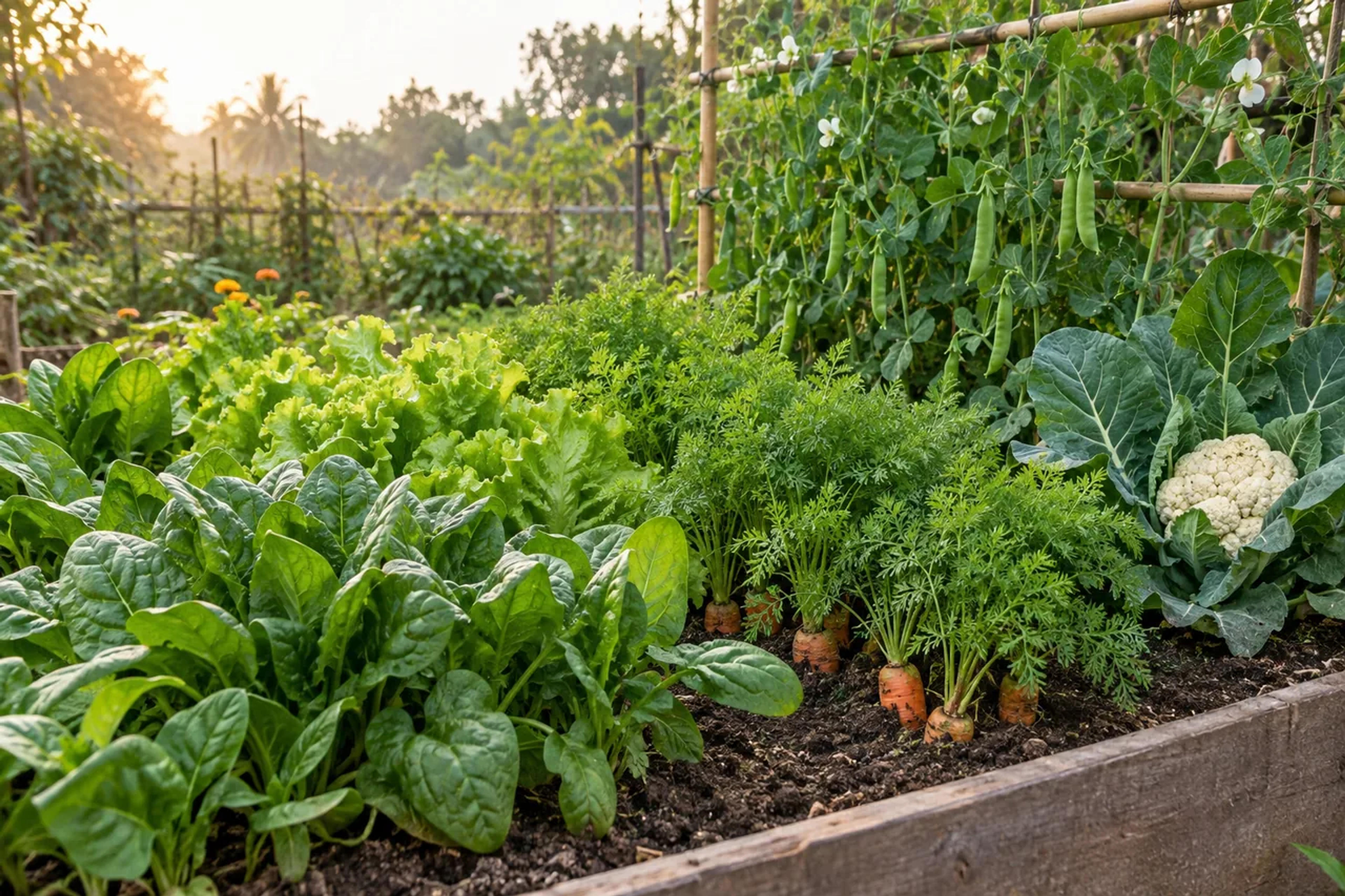
| September–October | Radish, peas, lettuce, cabbage, cauliflower, carrots and the first fenugreek window | Root crops need usable soil depth; transplanted brassicas need different planning from directly sown radish or peas. |
| November–December | Fenugreek, beetroot, turnip and late cauliflower; tomato nursery is commonly listed for November–December and capsicum through January | Cold, fog and low winter light can slow growth. Keep records instead of assuming every crop will follow the same number of days. |
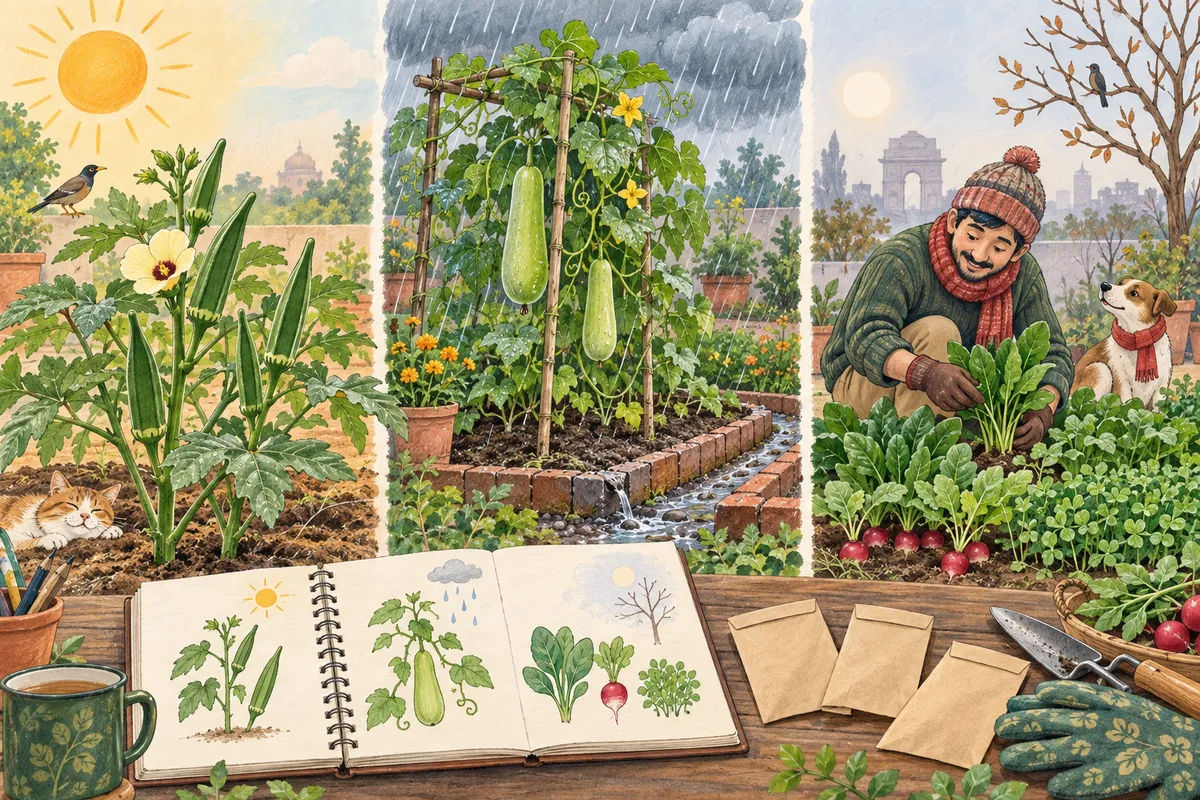
Check what the date is telling you to do
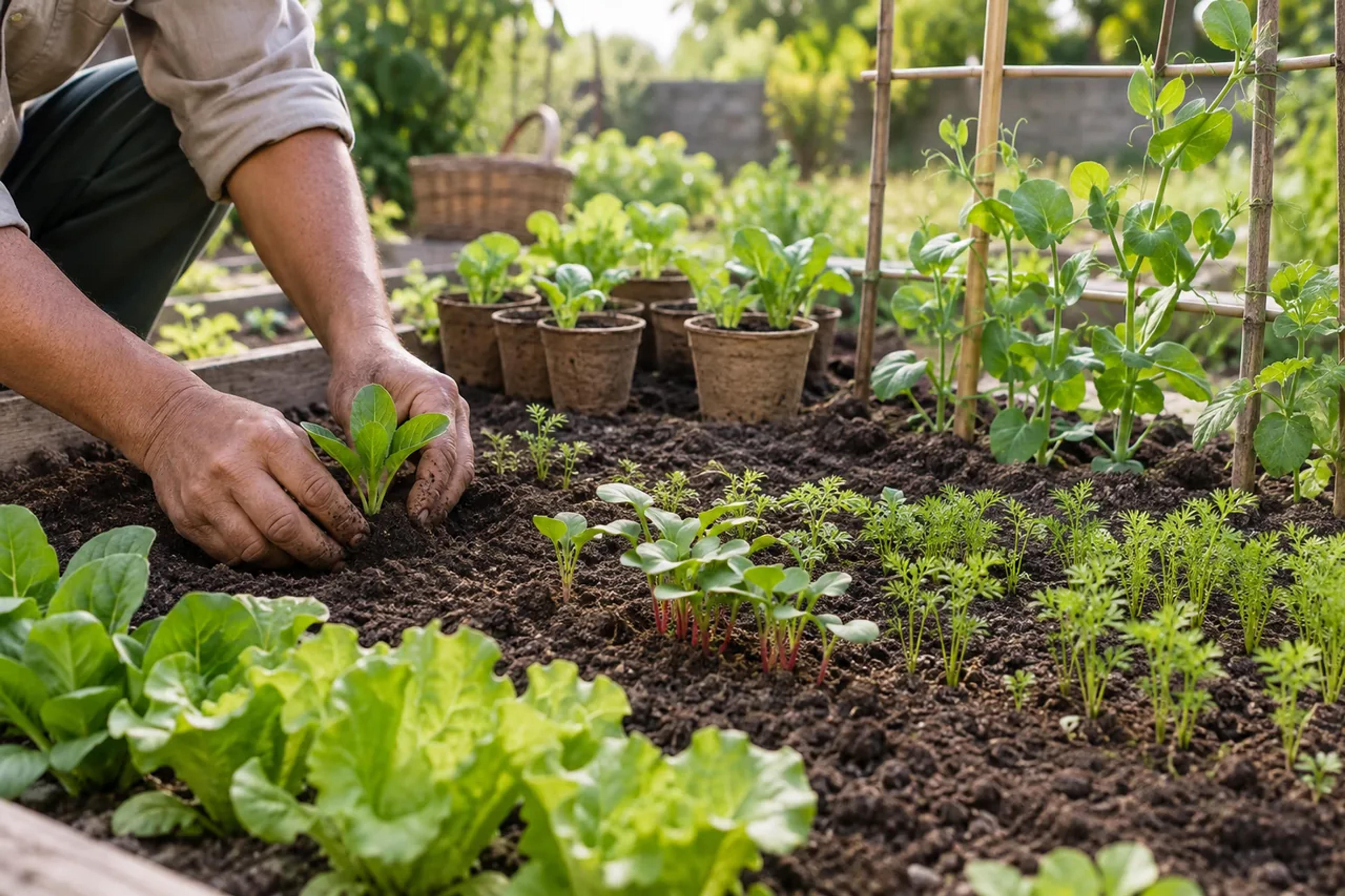
Imagine reading that it’s time for tomatoes. Does that mean sowing seeds in a nursery, or moving seedlings into their final bed? Those are different stages. Cabbage, cauliflower, tomato, chilli and brinjal are often raised before transplanting; crops such as radish, carrot, peas and many beans are commonly sown directly.
The variety matters too. IARI’s cauliflower guidance separates early, mid-early, mid-late and late groups according to the temperature needed for the head to develop. So take the actual seed packet to the conversation. The word cauliflower alone won’t tell you which timing to follow.
Now look at the space you’ve got
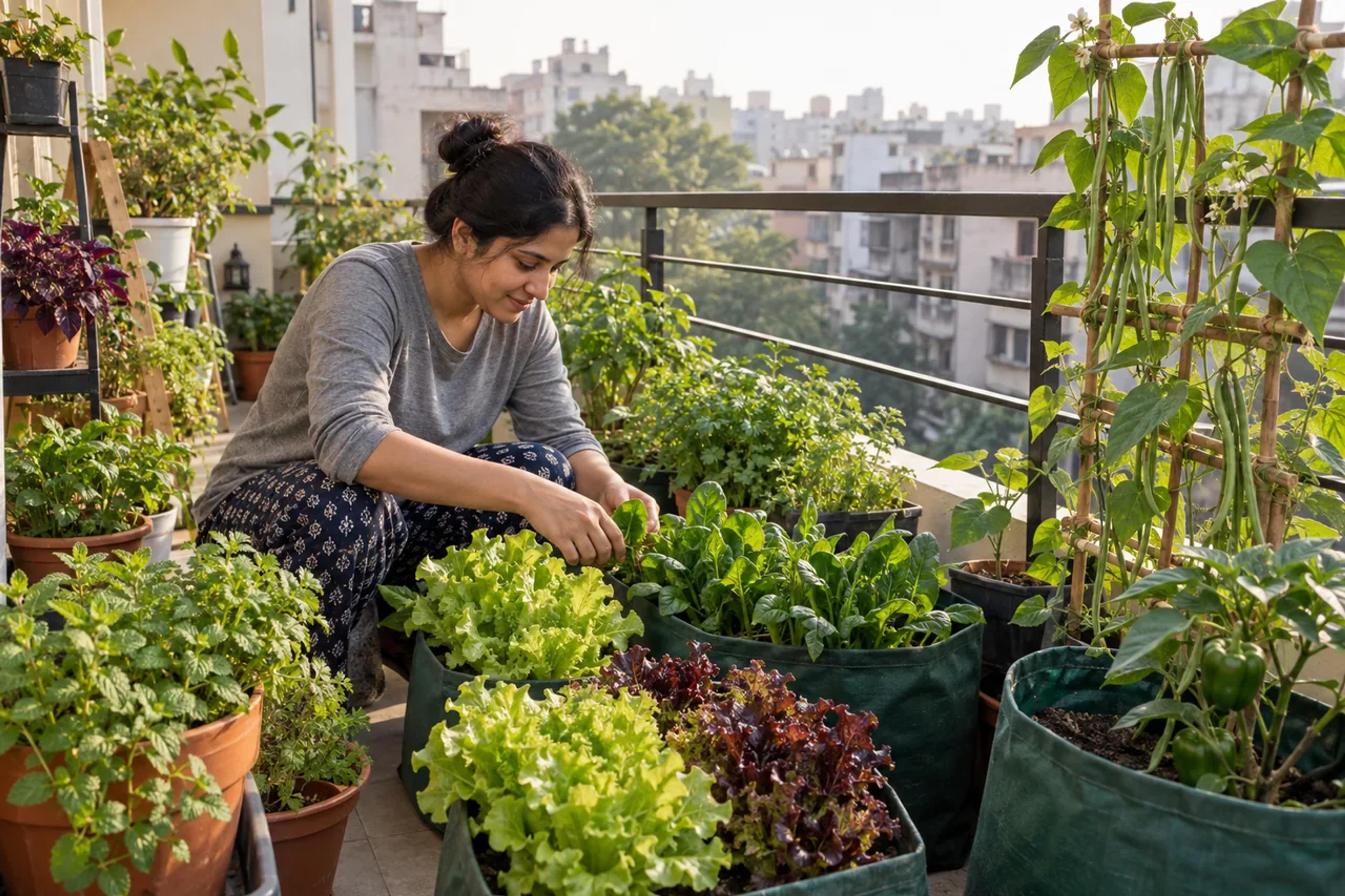
A gourd vine needs room and support. A radish needs enough usable soil depth for its variety. Sunlight, drainage and container size deserve a place on your list before you bring the plants home.
Pick two or three vegetables you cook often. Write down the variety, sowing date and where you planted them, then take a photo each week. Later, when you’re wondering whether the rain or a hot spell changed things, you’ll have something to look back at.
- Keep the packet for its spacing and sowing-depth instructions.
- Check whether a date means nursery sowing, direct sowing or transplanting.
- Think about drainage before heavy rain and suitable shade before peak heat.
- Use harvest dates to plan; leave room for the crop to take longer.
The calendar helps you start. Then keep checking.
You’ve picked the month and planted the seeds. What happens during the weeks after that matters too. Light, moisture, heat and pests can change, and neighbouring plants don’t always respond in exactly the same way.
This is the part we’re thinking about at Kyari: growers getting to know the plants, with AI-assisted monitoring to flag changes worth checking. The grower still needs to go over, look properly and decide what to do. A reading is useful when someone can act on it.
If daily care doesn’t fit your week
You may enjoy choosing crops and seeing them grow while knowing that daily tending would be hard to fit around work or travel. A managed vegetable bed is one option to explore. Ask who does the care, what updates you receive and how the farm handles a crop that struggles.
Kyari is preparing beds for Gurgaon and South Delhi. We’ll share the exact location, price, sizes, crop list and delivery arrangements before you decide. For now, you can join the waitlist without paying or reserving a bed.