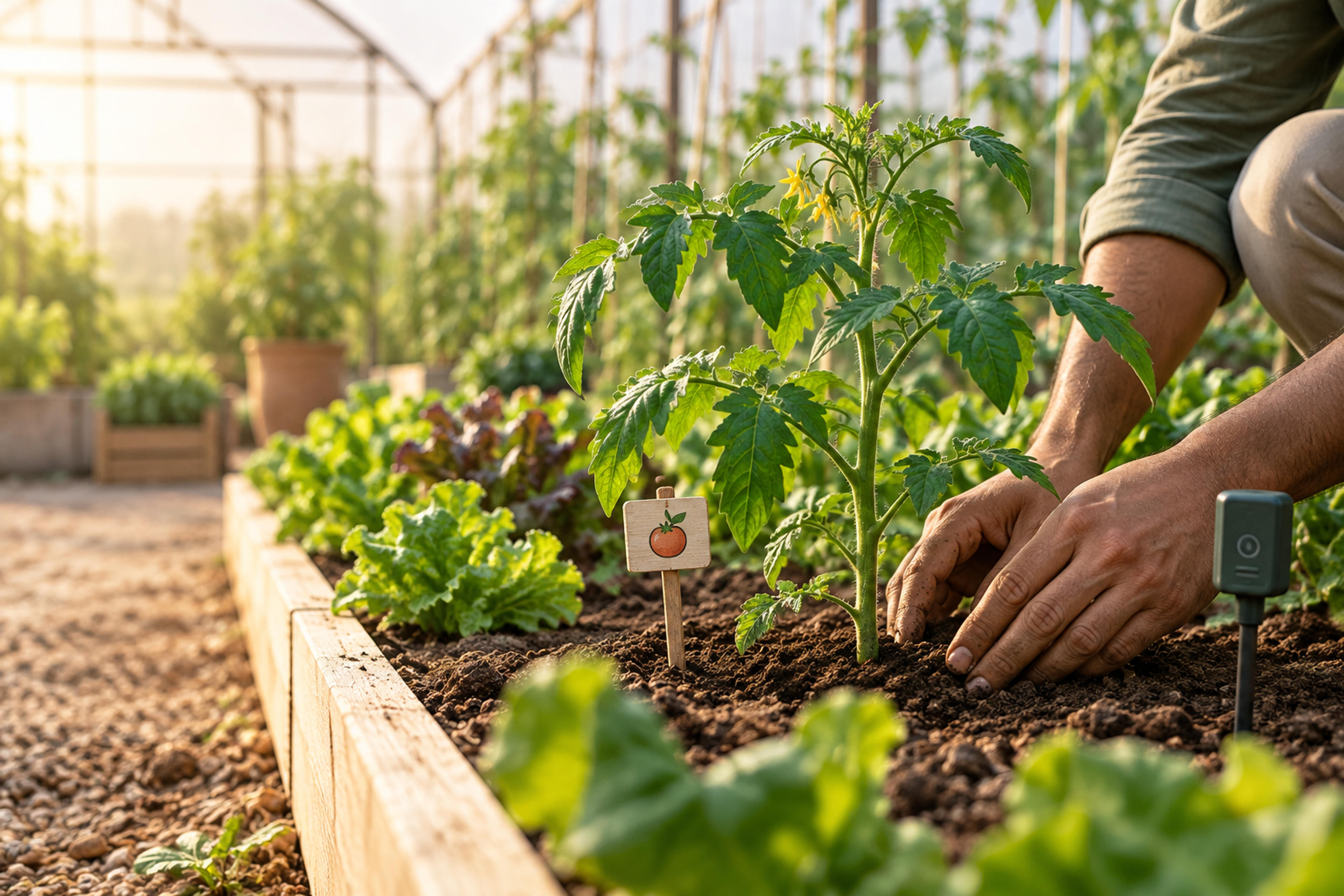
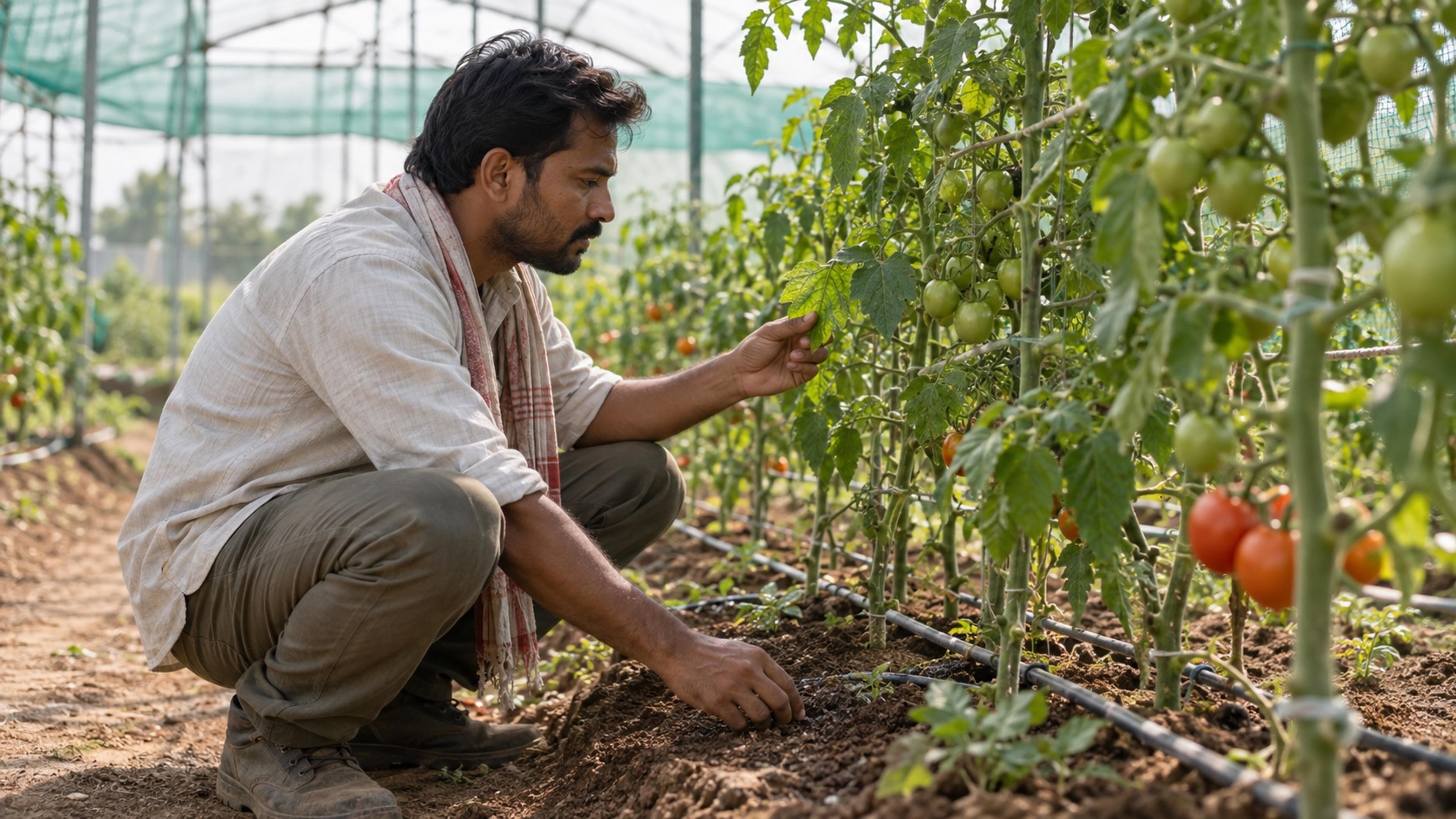
Meet TomaBaby 07, the tomato plant in our illustrated example. It’s a warm afternoon and a few leaves are drooping. Your first thought might be, give it some water. Quite reasonable. But before reaching for the watering can, let’s see what a grower would check.


- 01Notice
A leaf looks a little different today.
- 02Check
The grower checks the leaves and soil.
- 03Care
The grower responds, then checks again.
Start by having a proper look
Most of the bed looks fine from a distance. Up close, this plant looks different from yesterday. The grower checks its leaves, feels the soil near the roots and looks at the conditions around it.
Drooping can have several causes, including heat and changes in soil moisture. One leaf doesn’t tell the whole story. Looking at the plant and its surroundings gives the grower a better starting point.
More water isn’t always the next step
In this example, the soil feels dry. The grower waters around the roots and plans to return for another look. If the soil had already been wet, adding water might have made things worse. The right response depends on what the check reveals.
Water needs change with the crop, its stage, the soil, heat and wind. Overwatering can stress roots too. So keep asking what the plant needs today, even if yesterday’s routine worked well.
- Check the soil and conditions before watering automatically.
- Come back after making a change and see how the plant responds.
- Keep a note of watering, weather and growth so you can spot a pattern.
The return visit matters
It’s tempting to water and move on, assuming the job is done. Coming back tells you whether things have improved or whether there’s something else to investigate.
Regular observation gives a grower more chances to catch a problem early. It can’t promise a perfect harvest; weather, pests and disease still affect plants. But it gives the next care decision something better to go on than a guess.
Where the monitoring tools could help
This is the kind of daily work we want to support at Kyari. Our plan combines growers with sensors and AI-assisted monitoring, so changes can be flagged for a closer look.
Think of a flag as a reminder to go and check that plant. It isn’t a diagnosis, and it shouldn’t automatically become a treatment. The grower needs to inspect the plant, consider the conditions and decide what to do.
The preview on the website shows how those updates might feel. It’s an illustration of what we’re building; the first beds and real growing updates are still to come.
You should be able to ask about the care
What went into the soil? How was a pest handled? Why did the grower make that change? We want you to be able to ask those ordinary questions and understand the answers.
We plan to use organic practices, and we’re not claiming organic certification. Those details deserve clear explanations of their own. For now, this example shows the habit we’re building around: look closely, check what’s needed and come back to see what changed.