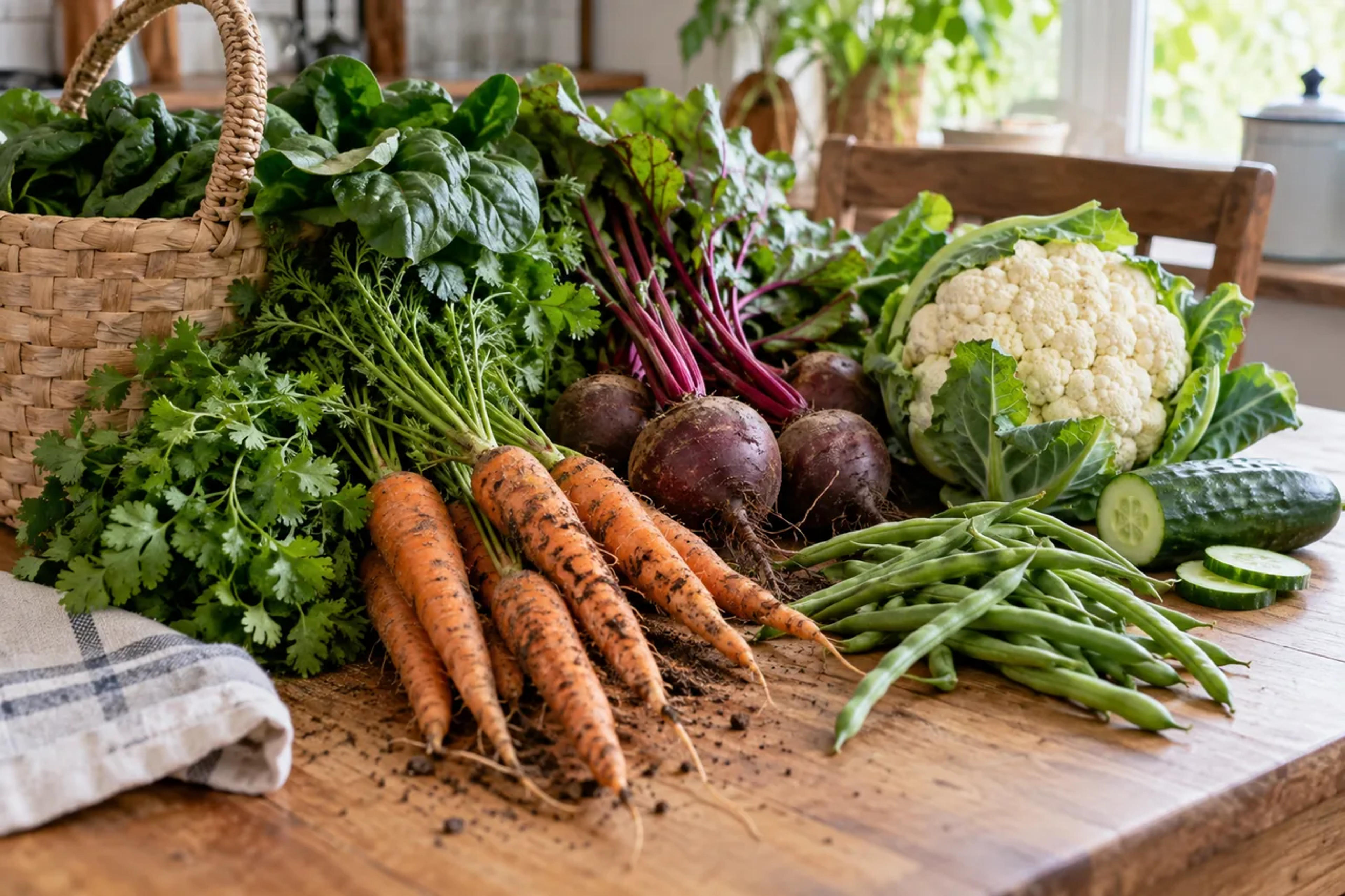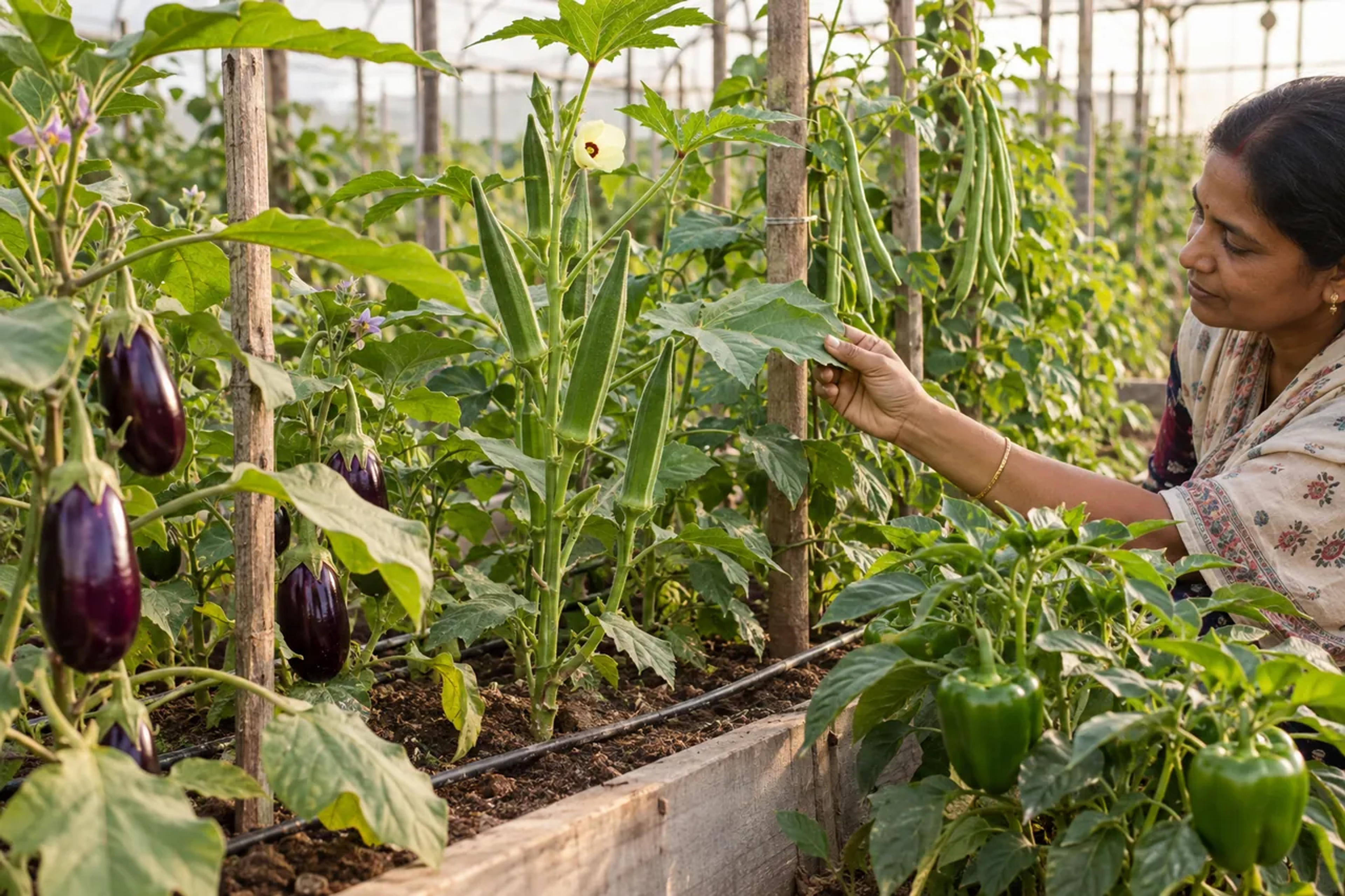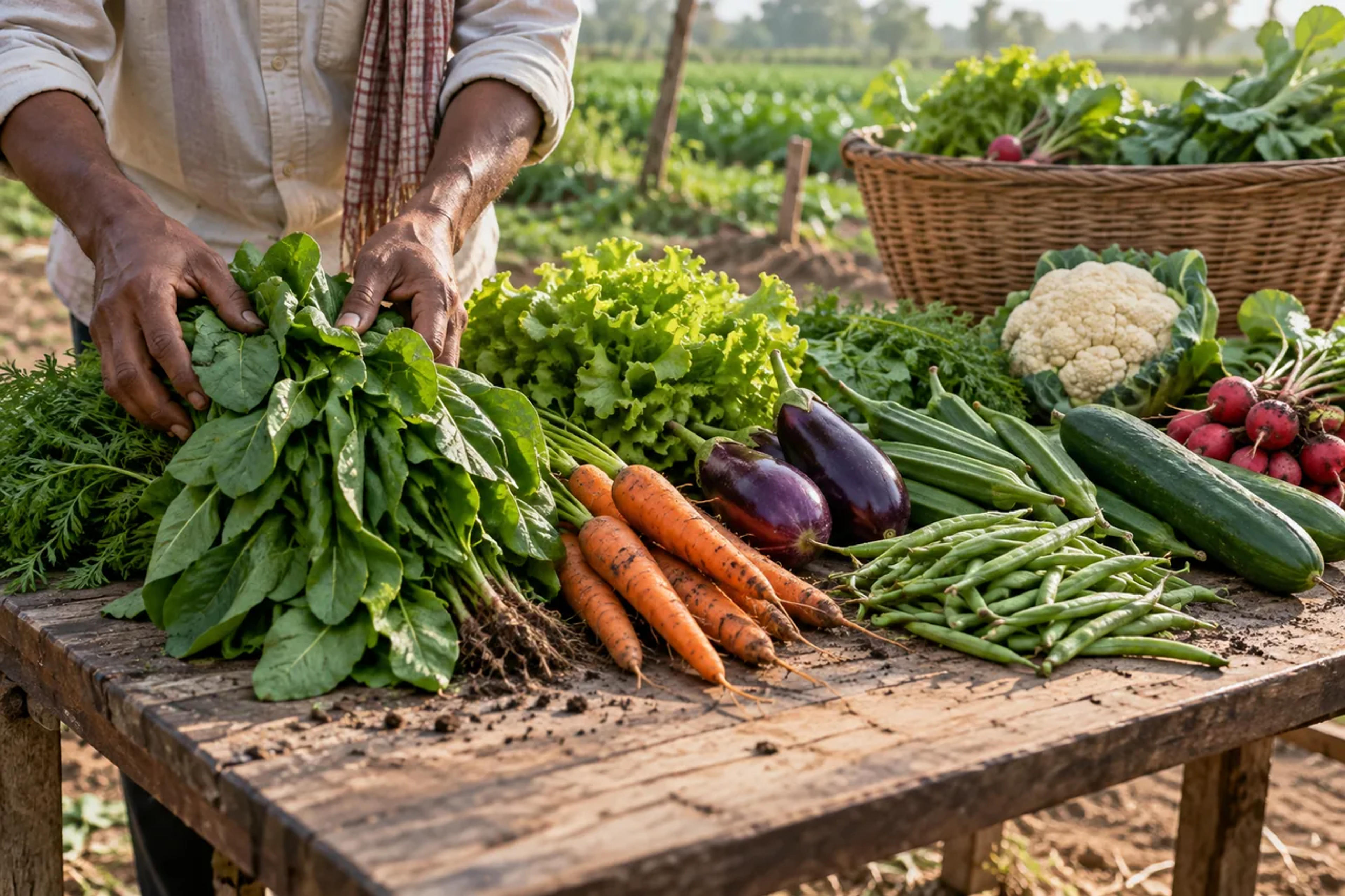
When the air looks hazy over Delhi or Gurgaon, it’s natural to look at the vegetables on the counter and wonder: can pollution reach these too? It’s a fair question. The useful answer is a little more specific than “market vegetables are unsafe.” Let’s look at the routes contamination can take, what local research can and can’t tell us, and the questions worth asking.
Pollution can reach a crop in more than one way
Dust in the air may settle on leaves. Soil and irrigation water matter too: what’s in them can affect what a plant takes up as it grows. And after harvest, produce can pick up dirt or germs through water, storage, transport and handling. These are different routes, so “pollution” isn’t one single thing to test for.
There’s another distinction worth keeping in mind. Bacteria and viruses can make people ill through foodborne infection. Metals such as lead or cadmium are chemical contaminants and raise different questions about exposure over time. A dirty-looking leaf doesn’t tell you which, if any, is present.
Swipe the table sideways to read all columns →
| Where to look | What may matter | A useful question |
|---|---|---|
| Air and dust | Dust settling on exposed leaves | How are leafy crops protected and rinsed after picking? |
| Soil and water | The growing site and irrigation source | Where is this crop grown, and what water is used? |
| After harvest | Wash water, surfaces, transport and storage | How are the vegetables cleaned, packed and kept? |
What one Delhi study found, and what it cannot tell us
A 2022 study by researchers affiliated with the Indian Agricultural Research Institute tested six kinds of vegetables for five metals. Its 504 vegetable samples came from five growing sites and two market sites in Delhi. The abstract reports cadmium concentrations above 0.20 micrograms per gram in all the tested vegetables except tomato. That describes the study samples; it isn’t a reading for every crop or market.
That deserves attention. It is also a study of particular crops and sites, not a measurement of every Delhi market today, and it doesn’t tell us the condition of vegetables sold across Gurgaon. One result can’t identify the source of a particular shopper’s vegetables or tell us what is in the next basket. We’d need current, representative testing for that.
What this means for health
The concern with toxic metals is exposure: what a person takes in, how much and over what period. The World Health Organization says lead can affect several body systems and is especially harmful to young children. That’s a reason to take credible testing and pollution controls seriously; it isn’t a reason to diagnose a health problem from the look of a vegetable or to assume that a particular market’s produce is contaminated.
Germs are a separate, everyday food-safety concern. Produce can be contaminated during growing or after harvest, and people at higher risk from foodborne illness may need particular care with raw foods. Keeping those two issues distinct helps us choose sensible steps instead of worrying about every vegetable in the same way.
A few sensible questions at the market
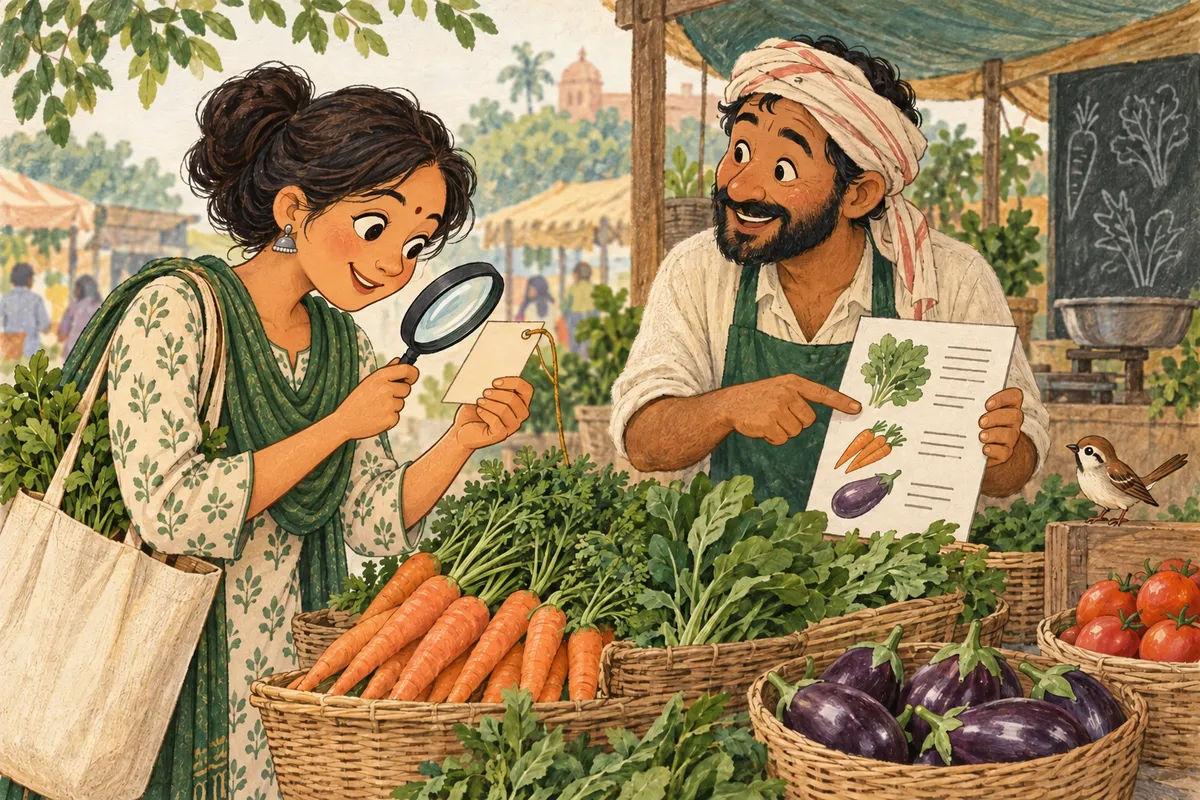
You don’t need to turn the weekly shop into an investigation. When it matters to you, start with a friendly question about where the crop was grown and how it is handled. If someone makes a claim about testing, ask which crops and samples were tested, when, and by what laboratory. A report for one crop or date doesn’t automatically cover everything on the stall.
Freshness and a neat display are useful for choosing quality, but they aren’t a laboratory test. “Organic” is about a production standard; it doesn’t by itself answer every question about dust, water, or safe handling. The same goes for growing your own: knowing the grower is helpful, and soil and water still deserve attention.
- Ask where the vegetables were grown and whether the source changes by season.
- Look for clean produce, sound packaging and sensible storage, especially for cut or leafy vegetables.
- If testing is mentioned, ask to see the date, crop, sample and laboratory details.
- Treat claims like “pollution-free” or “chemical-free” as a prompt to ask what they mean and how they know.
At home, keep the washing simple
Wash your hands, then rinse fresh vegetables under clean running water before cutting, cooking or eating them. Rub firm produce and use a clean brush where it helps. Washing can reduce dirt and some germs on the surface, but it isn’t a way to test for or remove every chemical contaminant. Don’t use soap or household detergent on food.
Use clean boards and knives, keep raw meat separate from ready-to-eat produce, and refrigerate cut vegetables. These small kitchen habits help with the handling side of food safety, whatever the air quality was that day.
What we want to be able to explain at Kyari
A farm bed should make it easier to ask ordinary questions: where is this grown, what water is used, and how are the crops looked after? We’re preparing managed beds for Gurgaon and South Delhi, and we plan to share our growing practices as those details are finalised.
We don’t have a published test report to point you to, and we’re not promising that a farm bed is a shield from city pollution. Clear answers and real records matter more than a reassuring label. We’ll share the practical details as the farm gets ready.