Hello friend. We spend so much time thinking about becoming a better version of ourselves. Stronger. Calmer. More focused. We work on our habits, our careers, even the people we surround ourselves with. But how often do we think about what we are feeding that version of ourselves, every single day? Take a look at your next meal. There is more happening on that plate than we usually give it credit for.
Who else is eating
your lunch?
Pick something from your plate. Meet a little of the life it feeds.
An ordinary meal. A whole hidden community. Tap a food to explore.
You are what you eat. Literally, in some ways.
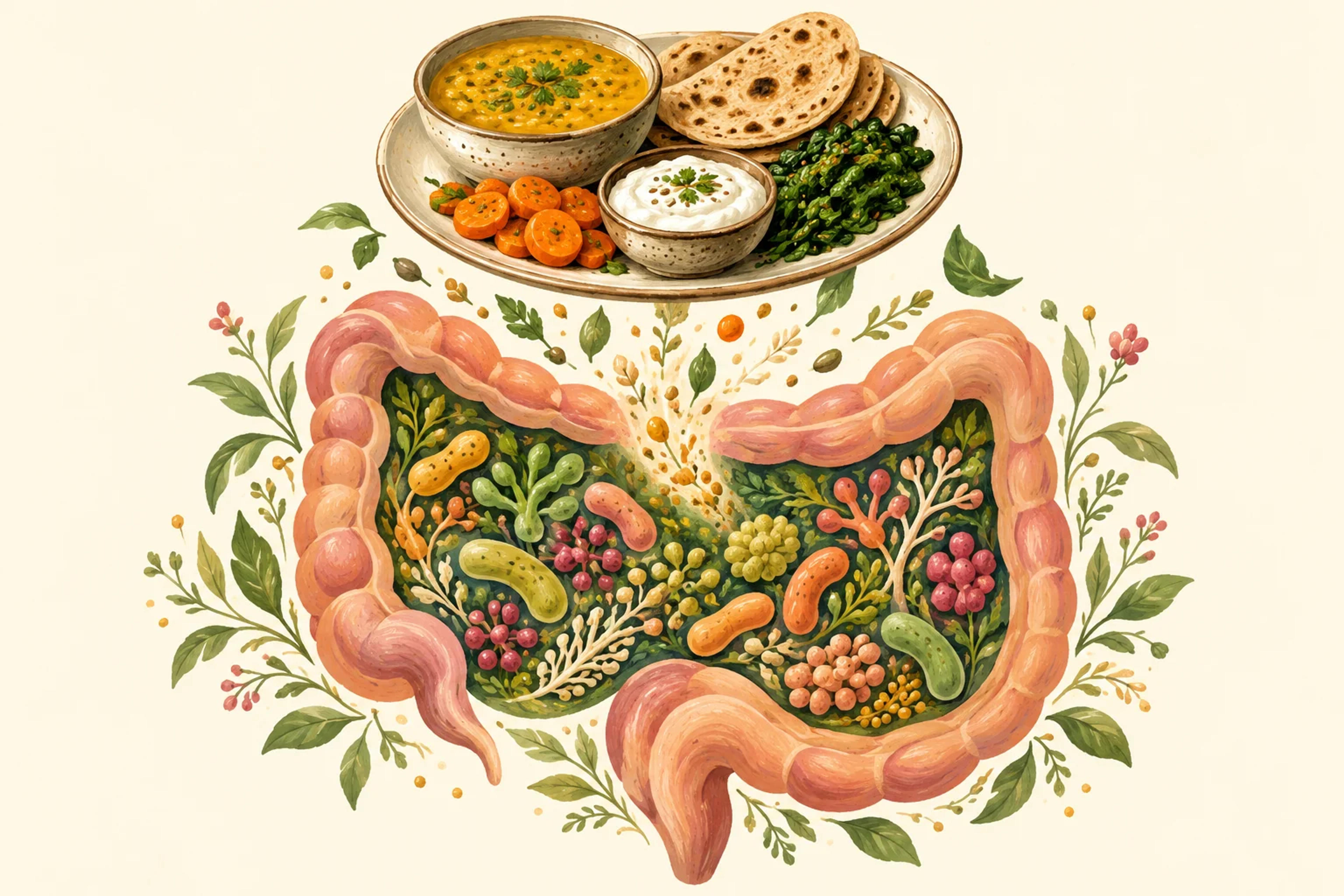
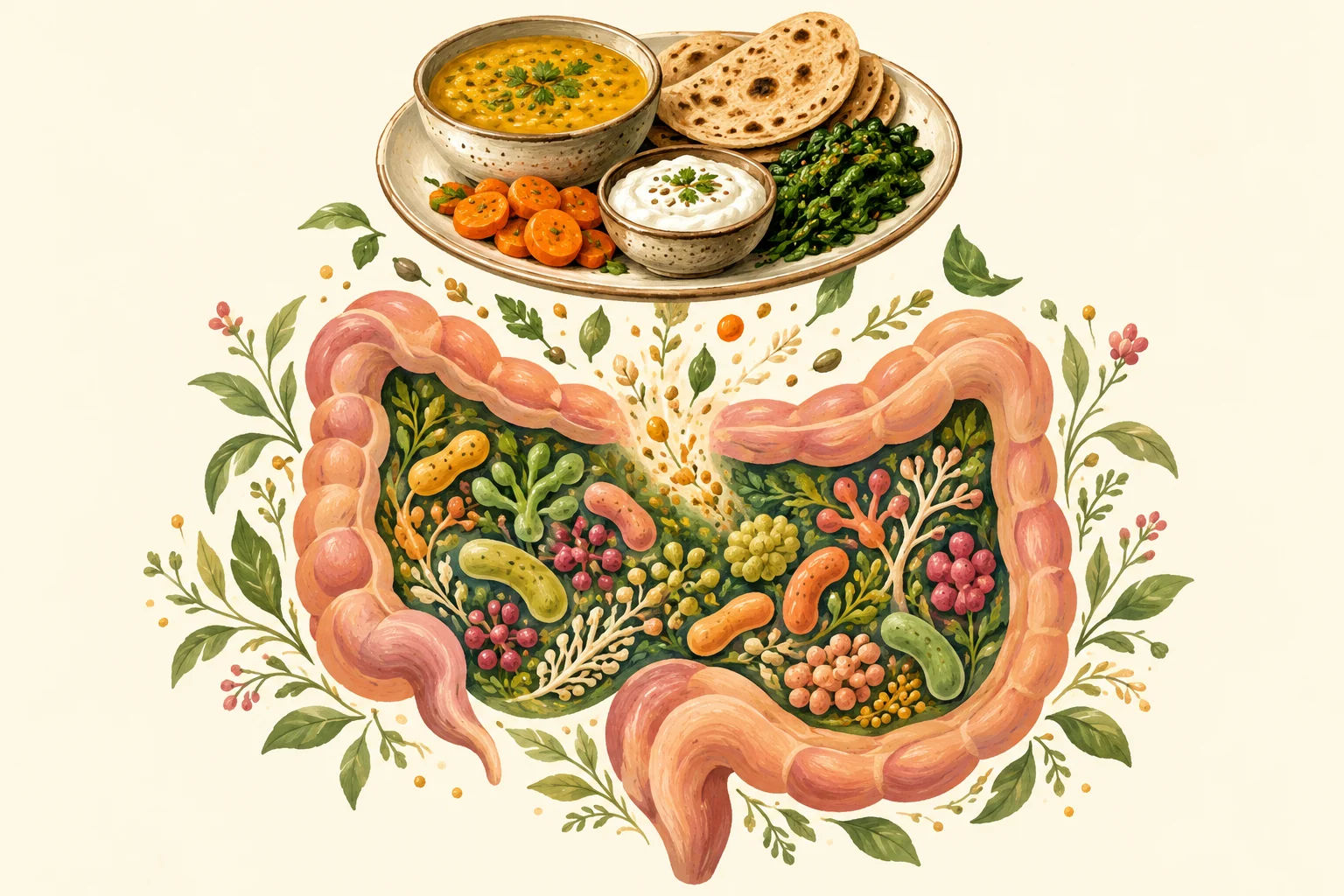
Think about a simple lunch. Dal, roti, a little sabzi. You eat it, wash the plate and get back to your day. But your body is still working with that meal.
Digestion breaks food into smaller parts: amino acids from protein, simple sugars from carbohydrates, and fatty acids and glycerol from fats. Your body absorbs these and uses them for energy, growth and repair. What looked like lunch becomes material your body can work with.
That is what makes ‘you are what you eat’ such an interesting thought. Food participates in the physical process of keeping you alive and building and maintaining your body. Of course, sleep, movement, genetics and your circumstances matter too. But food is one part of that process we meet every day.
And we are not the only ones at the table.
There is a whole community inside you
Your gut is home to a vast community of microbes, including bacteria, viruses and fungi. Many help process food and interact with your immune system. This community and its genes are part of what we call the gut microbiome.
I like to imagine it as a garden. Different organisms share a space, and what is available in that space influences how they live. Every garden has its own conditions. Our guts differ too; there is no single perfect microbial mix for everyone.
Netflix's documentary ‘Hack Your Health: The Secrets of Your Gut’ brings this hidden world into focus. Its official guide follows doctor Giulia Enders and other experts alongside four people with very different experiences of digestion, food and hunger. Food variety and our individual differences run through the discussion.
It is a useful starting point for curiosity. The next step is looking at what research can tell us about that everyday connection between our meals and our microbes.
When you eat, you feed them too
We talk a lot about protein. How much did you get? Which food has more? Fair questions. Fibre deserves a place in that conversation too, partly because some of it becomes food for our microbes.
Our digestive enzymes cannot break down many types of fibre. Some reach the large intestine, where microbes ferment them. In the process, they produce compounds called short-chain fatty acids. One of these, butyrate, is an important fuel for cells lining the colon. These compounds also take part in gut, metabolic and immune processes.
So the meal carries on working beyond what our own digestion can do. We provide some of the ingredients, the microbes use them, and their activity produces substances that can affect us.
A small Nature study found that gut microbes changed quickly when people briefly switched to diets made entirely of plant foods or animal foods. The study was short and the diets were extreme, so it cannot tell us which everyday diet is best. But it does show that this community responds to what we eat.
That makes me look at an ordinary bowl of dal a little differently. Lentils, chana, rajma, vegetables, whole grains, fruit, nuts and seeds all give us ways to bring fibre into our meals. These familiar foods deserve some attention.
Does your gut have a say in how you feel?
Think about the butterflies in your stomach before an interview. Or before telling someone something that matters to you. The connection between your brain and your digestive system is something you have probably felt already.
They communicate in both directions through nerves and other signals. This is called the gut–brain axis. Researchers are exploring how microbes contribute through the substances they produce and their effects on immune and metabolic processes.
The possibility is fascinating: could the community in our gut be part of the story of stress, mood and behaviour? There is evidence worth studying, but much of the work explaining the mechanisms comes from animals. We still have a lot to learn about what reliably helps people.
So food can be part of caring for yourself, without being the whole answer. A bowl of dahi cannot treat depression, and a microbiome test cannot explain your personality. ‘Food helps shape us’ is a useful thought. ‘Food decides everything about us’ goes much further than the evidence.
And the dahi next to your sabzi?
Fermented foods are another part of this story. In a Stanford trial of 36 healthy adults, eating more fermented foods over ten weeks increased microbial diversity and reduced several measured inflammatory proteins. The high-fibre group did not show the same average rise in diversity over that period.
That finding is promising, though a small trial and changes in blood markers cannot establish that a food prevents disease. It also reminds us that the gut is more complex than ‘eat this, get that result.’
Plain dahi or yogurt with live cultures can be a familiar option if you like and tolerate it. But fermented food and probiotics are not interchangeable terms. Probiotics are live microorganisms with a demonstrated health benefit in adequate amounts; a fermented food does not automatically qualify.
Idli and dosa batter is fermented too, but cooking means the finished food is not a reliable source of live cultures. And probiotic supplements depend on the particular strain and intended use. A bigger number on a bottle is not enough to choose one.
Start with your next meal
Now, what do we do with all this? We can begin in the kitchen we already have, with food we know and a change we can keep enjoying.
Think about what you usually eat across a week. Is there room for another pulse, a different seasonal vegetable or a whole fruit? Variety can be ordinary. It does not need to be a sixty-ingredient smoothie.
- Rotate the dal: moong today, chana or rajma another day, in portions that suit you.
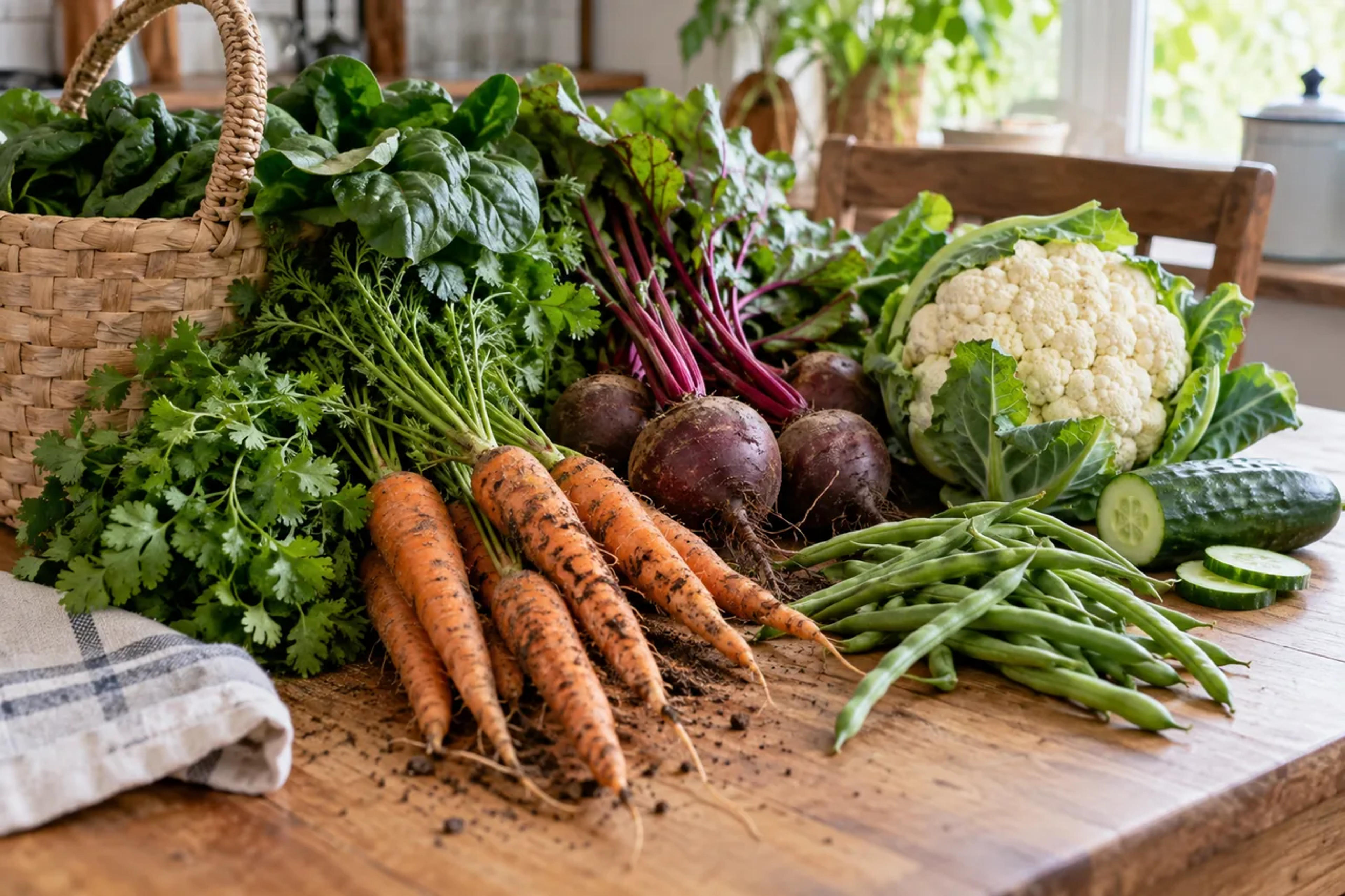
- Let the season change your sabzi. Try palak, carrots, bhindi or whatever is available and affordable.
- Make room for whole grains, fruit, nuts or seeds where they fit your meals.
- Enjoy plain dahi with live cultures if it agrees with you.
The person you are becoming eats today
Give yourself time as you change things. If you eat little fibre now, add it gradually and drink enough fluids. Notice what you tolerate. A sudden jump can bring gas and discomfort; your gut does not need the same overnight transformation we sometimes demand of ourselves.
If you have a digestive condition, follow advice suited to you. Persistent pain, blood in the stool or unexplained weight loss needs medical attention.
What stays with me is how easily we overlook something we do every day. We plan so much for our future selves, while today's meal gets squeezed between meetings, errands and whatever comes next.
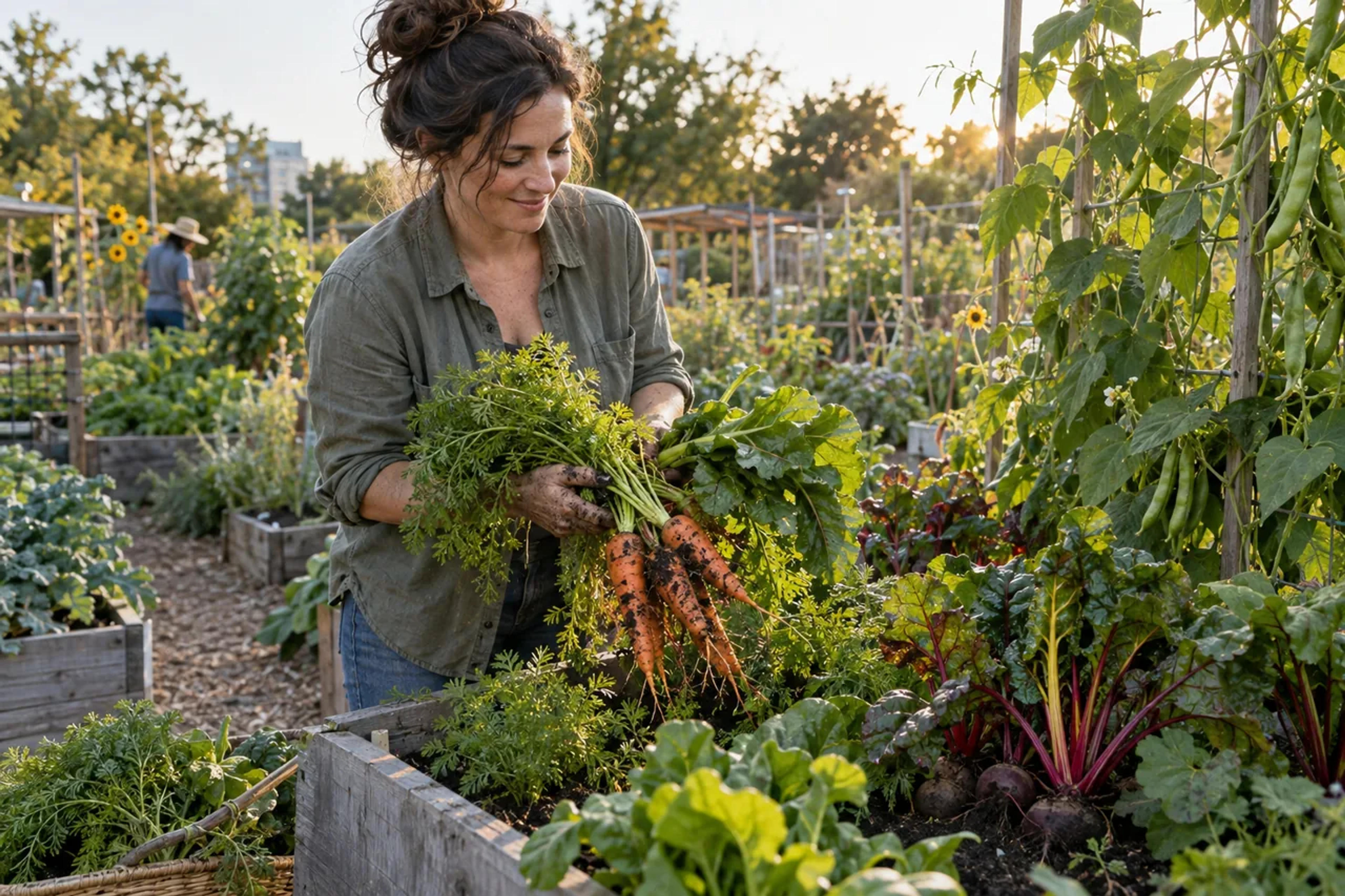
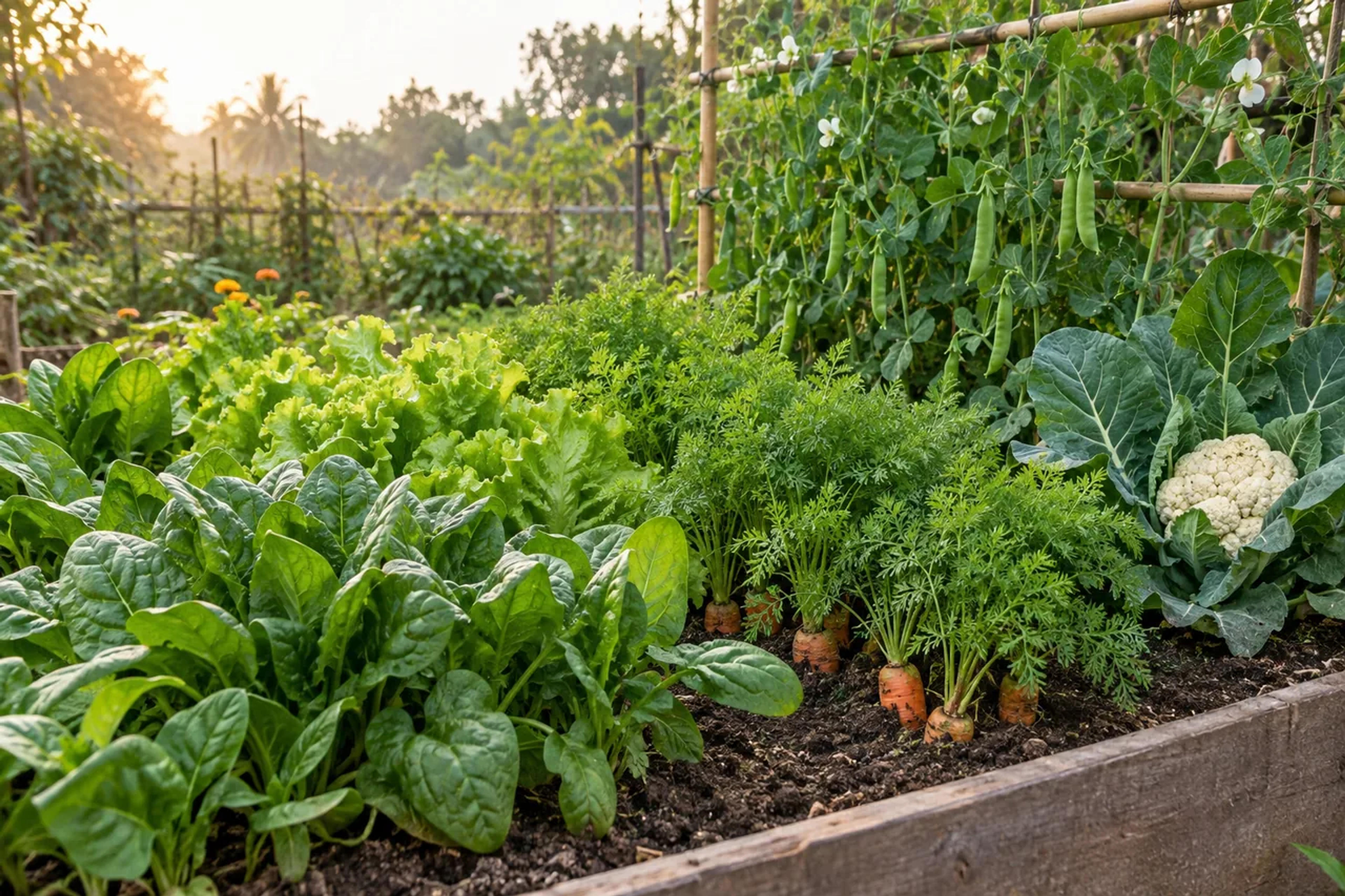
Growing a vegetable can bring some of that attention back. You see the first leaves, follow its care and eventually decide what to cook. That connection is part of what we are building at Kyari. Homegrown and organic vegetables are not special microbiome treatments, but following a plant can make us more curious about the food on our plates.
So the next time you think about becoming a better version of yourself, include the person sitting down to eat today. Give that person a little care too. A bowl of dal, a seasonal sabzi, something you enjoy and can return to tomorrow. That is a place to begin.